

- AI-powered content discovery engine
- Real-time automated content curation
- Live and archival content integration
- Azure AI-driven metadata generation
- Video and language processing fusion
- Industry-proven at IBC and NAB
Time to rethink content discovery.
Content discovery is a perennial challenge for streaming platforms. Studies show that two in three viewers spend over six minutes searching for something to watch, with more than half finding the process frustrating. Frustration that leads to dissatisfaction, which results in greater user churn.
Persistently high churn is an industrywide issue that undermines the commercial viability of many streaming services. Beyond price, it is content, the popularity of certain titles and the overall size of the library, that is seen as the major differentiator between services. However, when you have a large fleet of streaming platforms sitting on an endlessly deep and wide ocean of content, how do you ensure that the customer can find what they want, with ease and in an enjoyably differentiated experience?
Content personalisation is often seen as the solution, but traditional approaches rely heavily on a user’s viewing history to inform future interests, narrowing the possibility of further content discovery, deeper platform engagement and loyalty.
Viewer driven content curation with AI.
These challenges led to a collaboration between UIC Labs, Microsoft and the NBA to create a technical showcase, which demonstrated the way in which AI automation within the media backend workflow as well as directly into the consumer frontend streaming experience, could reimagine content discovery and engagement through real-time user generated content curation. Our role was to provide the engineering and product design to showcase Microsoft’s AI technology stack to deliver the NBA’s forward-thinking approach to fan engagement.
What we created is a flexible and scalable solution that enables users to search for content using conversational language, like, “Show me LeBron James’ drives and layups from Game 3.” Acting as a personal companion, the AI assistant simplifies content discovery by returning a near-instant curated playlist of highlights presented as part of a cohesive narrative. A narrator agent enhances this experience by writing a story that contextualises the requested actions within the broader scope of the game, offering viewers a deeper understanding of the flow and significance of the moments they are watching. This storytelling element makes the experience both engaging and accessible.
Viewers can also explore related content or dive deeper into the game’s context through the system’s dynamic features. For instance, during a pause in playback, the AI surfaces insights about key players involved in the last play or connects the moment to archival content, such as previous performances in similar scenarios. This seamless navigation between current games and historical content enhances both the depth and engagement of the viewing experience.
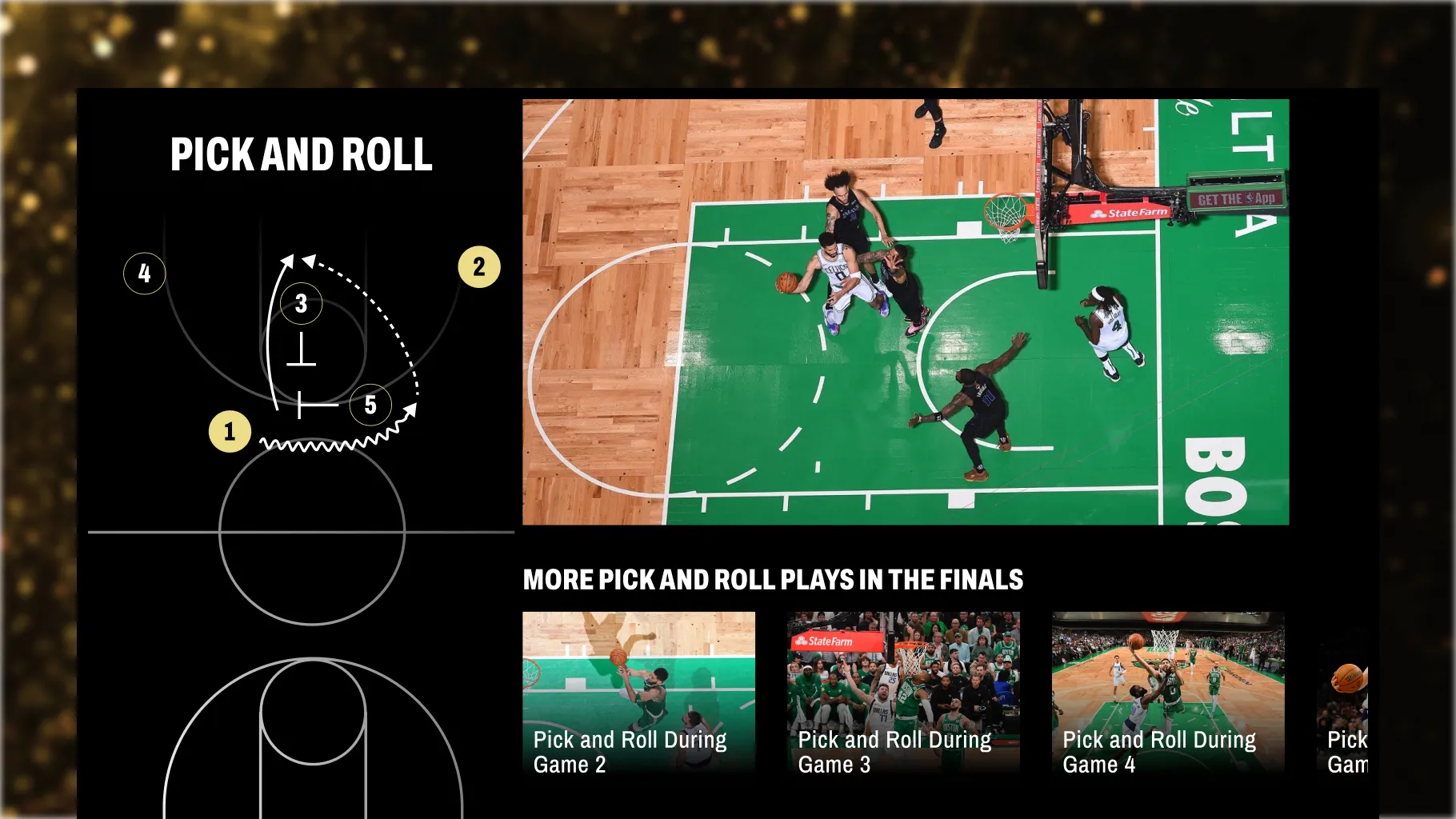
Beyond discovery, the system serves as an educator by providing real-time explanations of basketball terminology and tactics. When a commentator mentions a player’s positioning in the “dunker spot,” for example, the AI can quickly explain the term and its relevance to the play. This feature enriches the experience for avid basketball fans while also making the game more accessible to casual viewers and newcomers.
What did we prove from this technical showcase?
Increased engagement/view-time
- The integration of AI encourages exploration and content discovery to keep viewers engaged longer.
Reduced production time and costs
- LLMs can automate labour-intensive tasks such as logging metadata or selecting clips for highlights reels.
Increased the potential of advertising revenue through longer view-time
- The increase in engagement offers more opportunity for advertising placement.
Expanded audience
- The custom AI serves as an interactive guide, breaking down complex topics and providing real-time explanations. This feature is especially valuable for sports and special interests, lowering the barriers to entry making content more accessible to newcomers and casual fans.
Additional monetisation opportunities
- The AI implementation also lends itself to other monetisation strategies such as premium-tier value incentives and PPV event experiences.
Archive repurposing
- The interaction model opens exciting opportunities to repurpose and drive engagement of archive content.
How did we create this scalable solution?
Leveraging Microsoft’s Azure AI Video Indexer, computer vision, and natural language processing tools, the system analyses video content, identifies key events, and creates searchable data. The process begins with segmenting the game into chapters and scenes. Metadata is generated for each segment, capturing information such as specific player actions and game context. This metadata is stored in Azure AI Search, allowing users to retrieve precise results in real time.
We used Microsoft’s new “Content Understanding” system to index the source assets to capture basic scene information such as camera shot type, ambience and player information. We then built a custom domain-centric (i.e. Basketball) AI indexer using GPT-4o to recognise and log Basketball-specific events such as dunks, 3 pointers, blocks etc.
Another LLM implementation on the front-end uses that metadata from the indexers to search content and to create “stories” based on the user requests.
Finally, we trained another model with an actor’s voice to create a “personal commentator” that tied the technologies together to deliver a cohesive and innovative user experience.
How was the technical showcase received?
The showcase was extremely well received when demonstrated live at both the International Broadcast Convention (IBC) in Amsterdam and National Association of Broadcasters (NAB) in Las Vegas. It has created a lot of thoughtful conversation about the future of content discovery and more widely the changing way that users will interact with digital content with the assistance of AI.
Partnering with UIC Digital has allowed us to redefine what’s possible in sports streaming by integrating Copilot AI. The AI Content Concierge is set to be a game-changer, offering exciting opportunities to repurpose archive content and driving engagement, while also supporting new monetisation strategies such as premium-tier incentives.
The success of this project demonstrates the transformative potential of AI integration in media and entertainment. While this demo focused on sports streaming, the underlying technology can easily adapt to other domains, such as news broadcasting, entertainment archives, and multimedia advertising. For instance, news editors could generate highlight reels on breaking stories in real time, while entertainment platforms could provide tailored recommendations based on users’ viewing habits. Furthermore, context-aware advertising could seamlessly integrate into these experiences, offering smarter avenues for revenue generation. This is just the beginning of what’s possible when AI is used to enhance how audiences discover, consume, and interact with content.
It starts with two days.
Enough to know what to build first, and what it will cost.