
11 custom digital products over 16 years.
UEFA has worked with UIC since 2010. In that time we have designed and built 11 products for it, from internal operations tools to a streaming service used by fans across Europe.
How it started.
We began working with UEFA in 2010 on a single project, a redesign of its media archive. UEFA wanted a partner that could design a product people would enjoy using and engineer it properly, and that could move quickly when requirements changed. At the time, most of the firms it spoke to were strong at one of those things and weaker at the other.
Sixteen years on, we have delivered 11 products for UEFA. Some are B2B tools used by UEFA staff, broadcasters and journalists. Others are consumer apps used by fans on phones, consoles and smart TVs. We continue to develop and support them today.
UEFA.TV.
UEFA.TV is UEFA’s own streaming service for fans. It carries extended highlights from 20 UEFA competitions, along with documentaries, original series, interviews, press conferences and competition draws, both live and on demand. Fans can follow their clubs to personalise what they see, and the player timeline marks goals, cards and other key moments so viewers can jump straight to them.
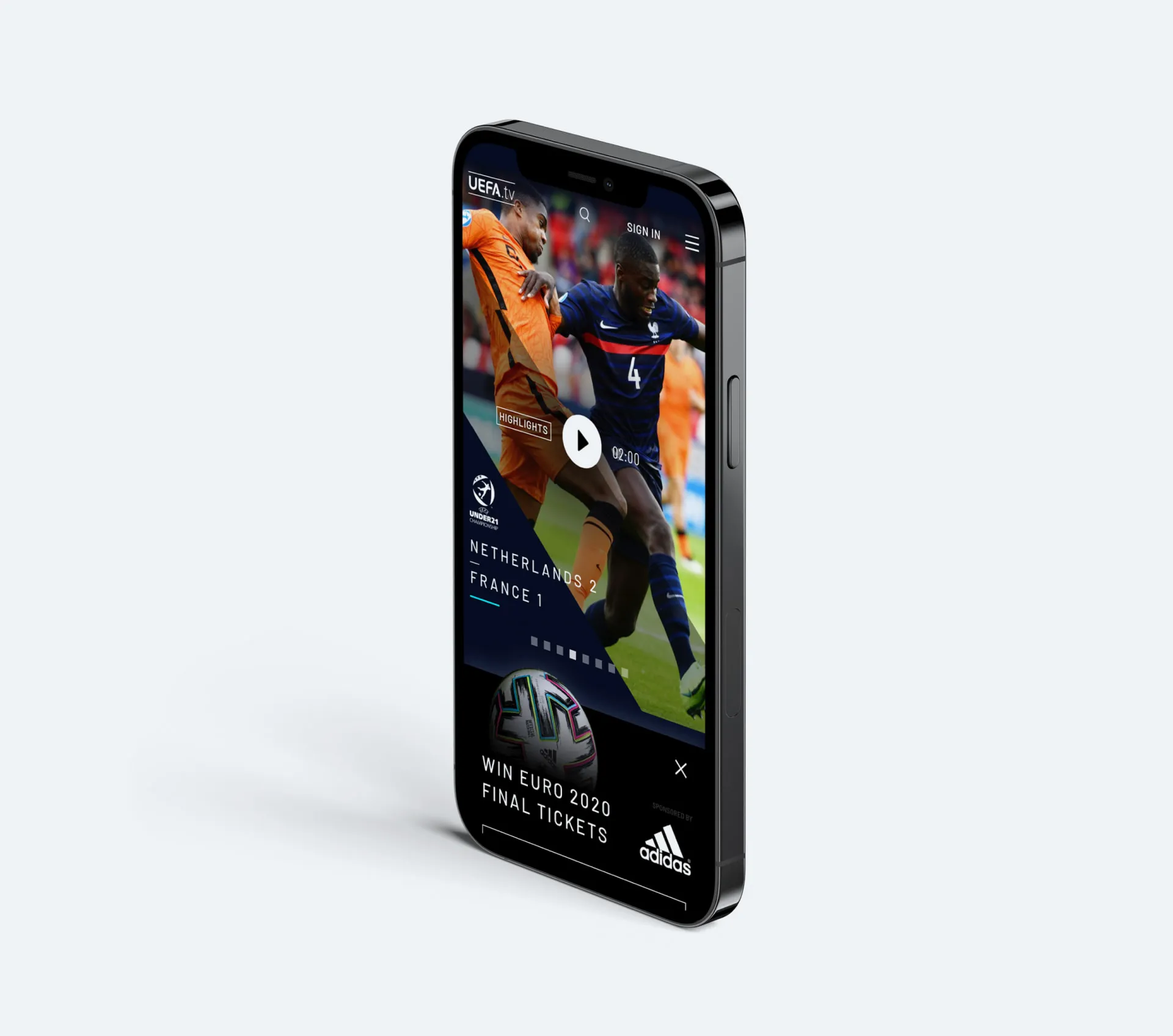
We built UEFA.TV natively for each platform, so it behaves the way people expect on every device.
- Web, smart TV (Hisense) and PlayStation 4 and 5: single-page app in React and Redux with Styled Components, one codebase across desktop, mobile web and TV
- iOS, iPadOS and Apple TV: native Swift, MVVM architecture with RxSwift
- Android phone, tablet, Google TV and Fire TV: native Kotlin, MVVM architecture with RxJava and data binding
- Middleware: AWS (Lambda, API Gateway, S3, ECS), Node.js with TypeScript, DynamoDB
Sharing one web codebase across desktop, mobile and TV lets us ship features to several platforms at once without the interfaces drifting apart. The middleware sits between the apps and UEFA’s video and content systems. That separation means UEFA can change one side without rebuilding the other, and we can add features the off-the-shelf video platforms do not provide.
UEFA Legacy.
Legacy was the first product we built for UEFA. UEFA had already digitised its archive and was selling the rights to its footage, but every request went through UEFA staff. That limited how much it could sell. UEFA asked us to redesign its media asset management system so external customers could search, order and receive footage themselves, within strict rules on who can see and download what.
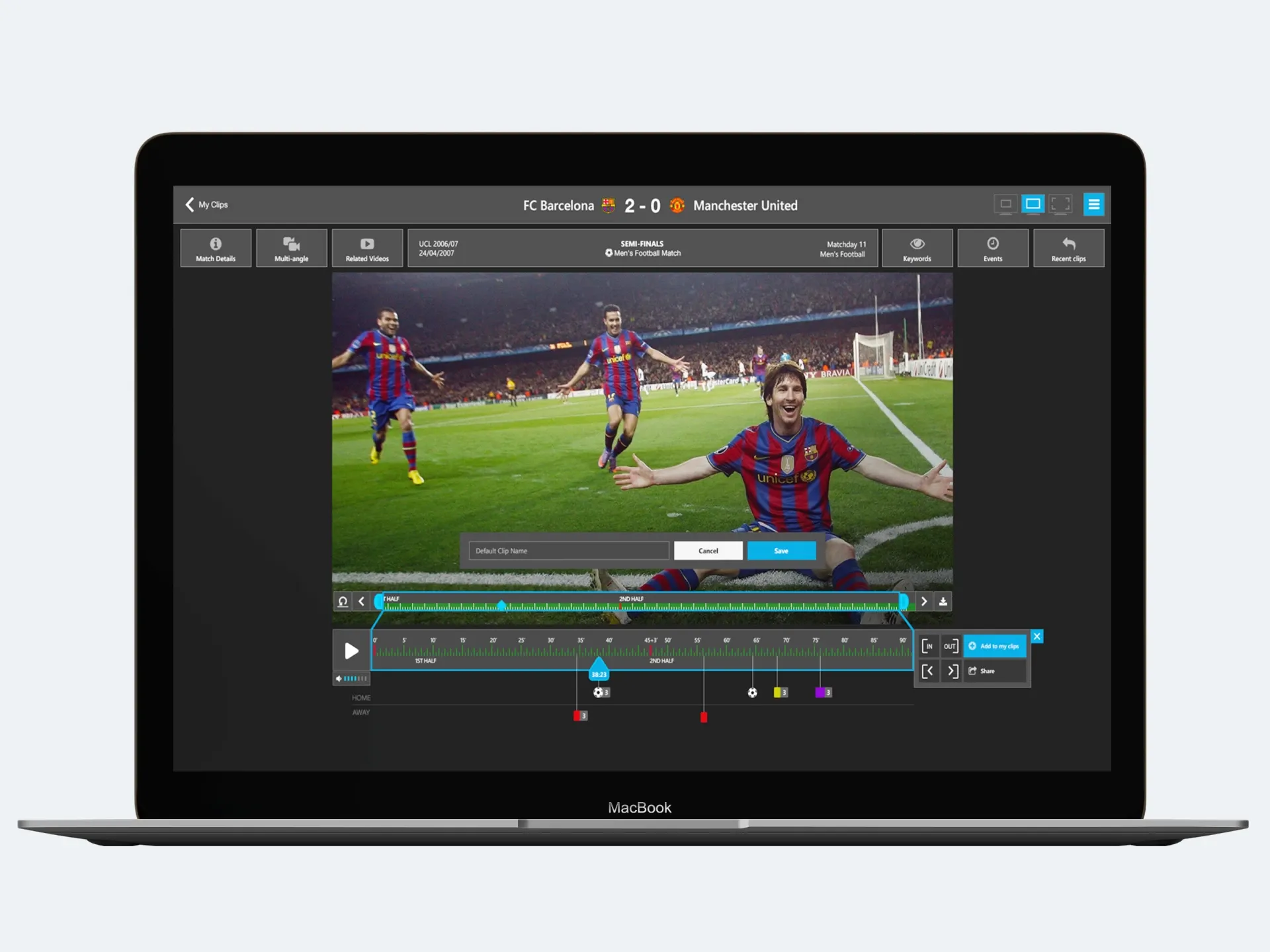
The people using Legacy are broadcasters, journalists and production teams who work with video all day. The interface had to stand up against the professional tools they already knew. We designed and built:
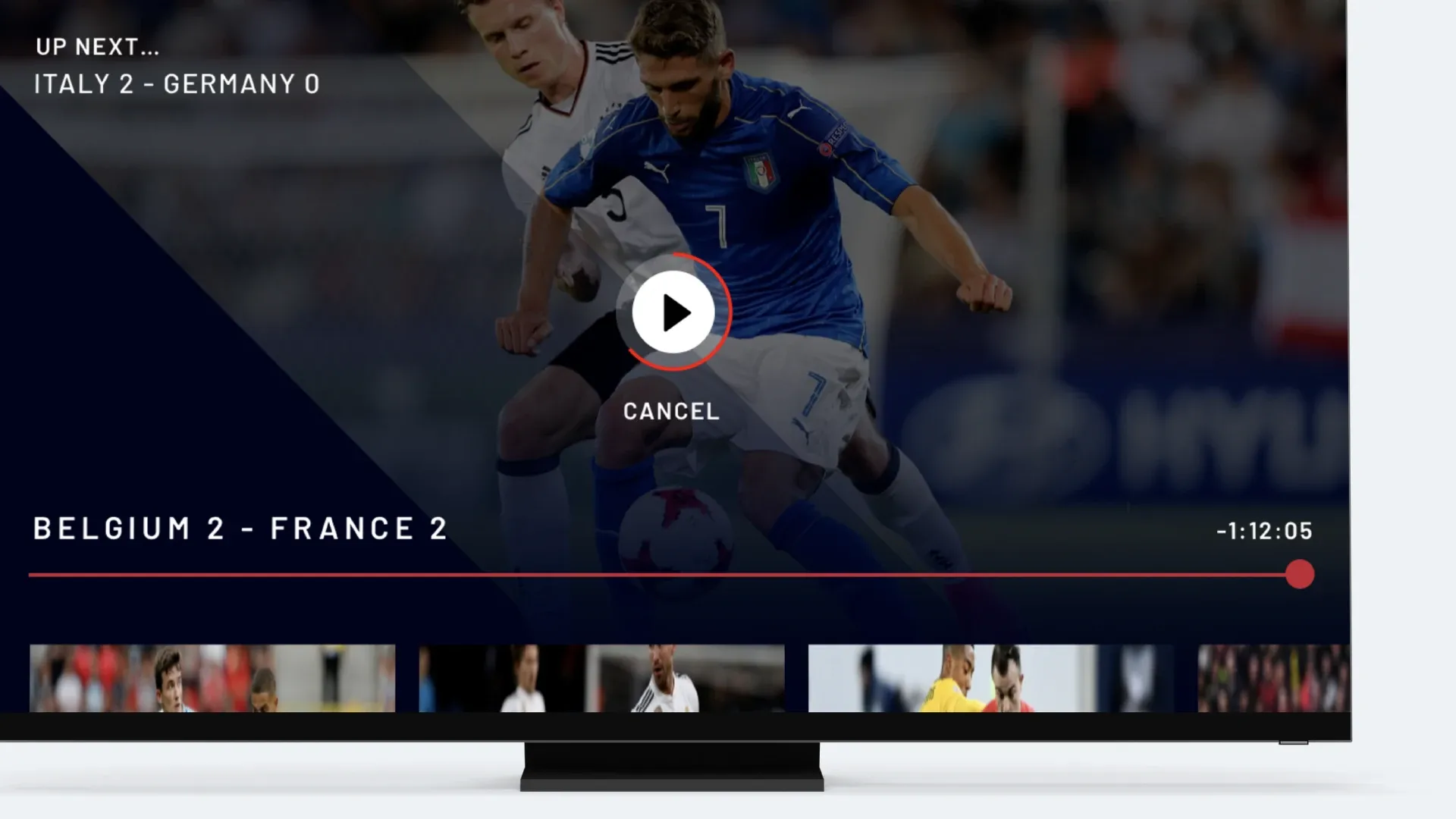
- a custom media player with match events such as goals and cards synced to the timeline
- predictive search across hundreds of thousands of matches
- multi-angle camera views and live tagging workflows
- a telestration tool for drawing on video frames
- clipping tools that join several match segments into one file for secure delivery
- configurable workspaces and a dark mode suited to edit suites
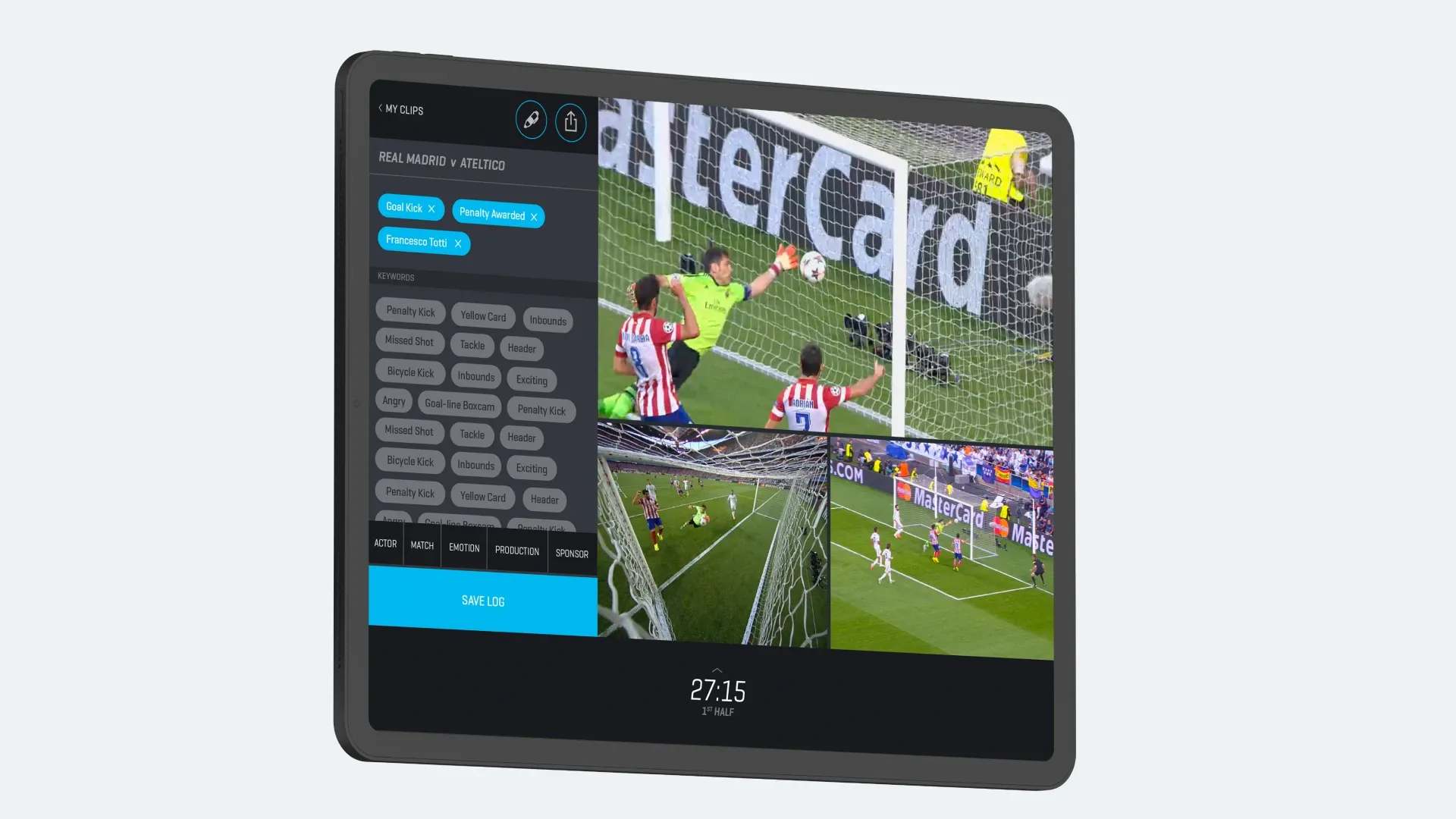
The first version, launched in 2010, was built in Flash. We have since rebuilt it with responsive web technology, and it is now central to how UEFA manages and sells its footage.
Technology. The front end uses Angular.js, JavaScript, HTML5 and LESS. The back end runs on scalable on-premise infrastructure, with a Node.js application server and a MySQL database.
UEFA Monitoring.
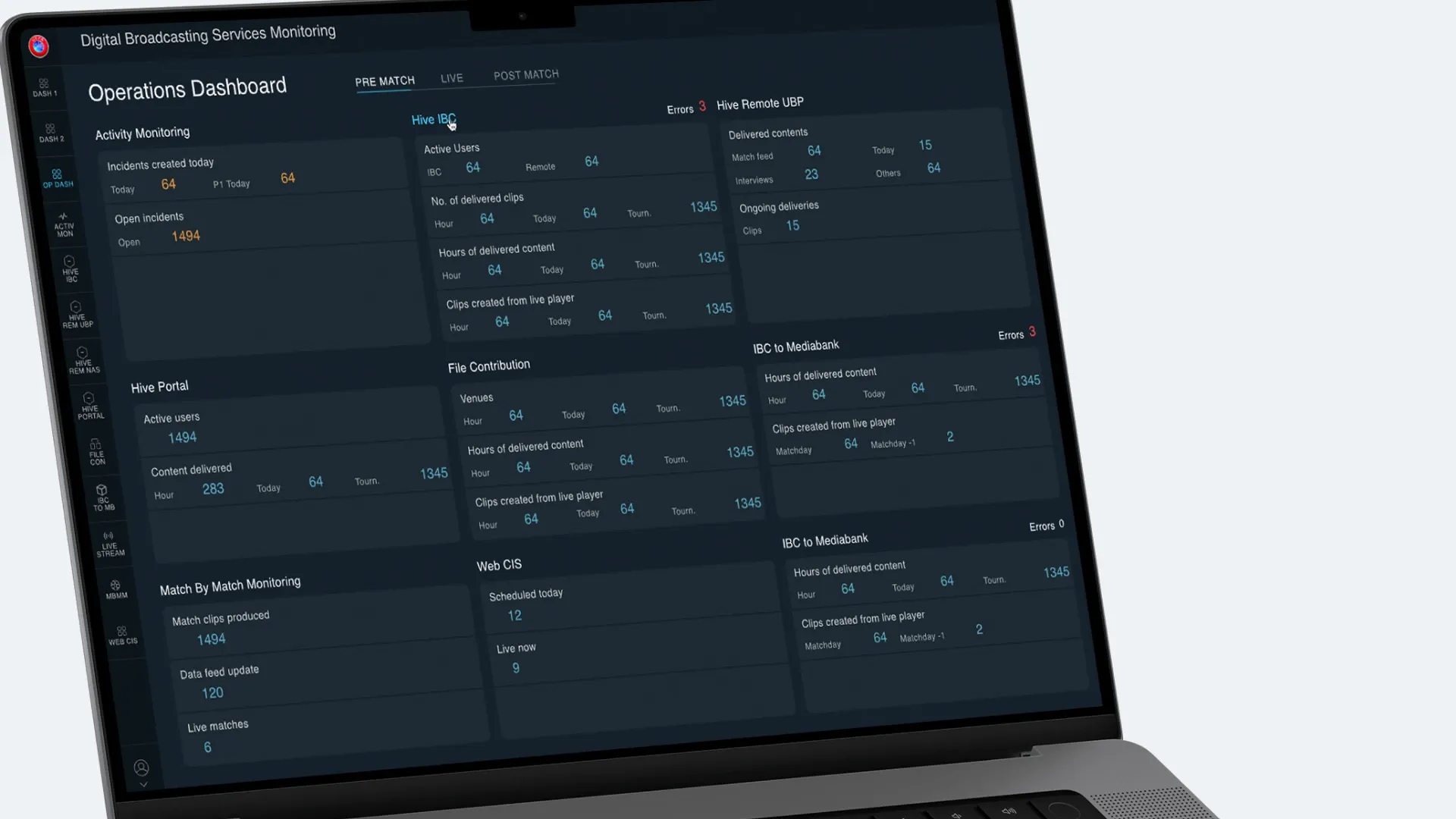
In 2014 UEFA asked us for a web tool to monitor the health of its core digital services on match days. The brief kept changing in the weeks before the next EURO tournament, so the team had to design and build at pace while requirements were still moving.
Many match operations teams use Monitoring at once. It brings together:
- a media player for watching several live broadcast feeds side by side
- dashboards showing the status of content ingestion points and data transfers
- a ticketing system for logging incidents and tracking fixes
- real-time upload and download figures for Legacy
The scale is easy to underestimate. At EURO 2016, UEFA’s monitoring operation filled a warehouse with wall-to-wall screens. Monitoring has been part of UEFA’s match day operations ever since, including EURO 2020, and we still develop and maintain it.
Technology. The front end uses Angular.js, JavaScript, HTML5 and LESS, with Federated Active Directory single sign-on for UEFA staff. The back end runs on Dockerised on-premise infrastructure, with a Java Spring application server and a MySQL database. Server-Sent Events push updates to every open screen as they happen.
How the partnership works.
The same team designs and engineers each product. Requirements go from a workshop to working software without a hand-off between agencies, which matters when a brief changes a few weeks before a tournament.
Most of these products sit alongside systems run by other suppliers and by UEFA’s own teams, so a large part of the work is integration.
After 16 years we know UEFA’s systems, its people and its calendar. That lets us plan releases around the football season and pick up new work quickly. UEFA.TV, Legacy and Monitoring are all still in use, and we continue to work with UEFA across its product portfolio.
It starts with two days.
Enough to know what to build first, and what it will cost.